Behind every card tap, mobile wallet transfer and QR code scan in Africa sits a layer of technology that customers never see. It routes the transaction, connects it to the right network, screens it for fraud and settles the money. This week, a young company working on that hidden layer won a strong vote of confidence from investors.
UAE-headquartered fintech enza has raised $6 million in a Seed+ round led by 4DX Ventures, with British International Investment (BII) taking part as a new investor. The round was announced on 9 November 2026. Existing backers Quona Capital and Algebra Ventures, which co-led the company’s seed round in 2025, also increased their stakes.
A round built on repeat backing
New money matters in any funding round, but the return of existing investors can say more. Quona Capital and Algebra Ventures had already seen enza up close for more than a year. Choosing to put in more capital suggests they like what they have seen of its execution.
BII, the UK’s development finance institution, joined only after its own investment and ESG due diligence. For a company that sells to regulated banks, passing that scrutiny carries weight. Banks and regulators tend to care about governance, controls and track record. A development finance institution’s backing signals that the business has been examined closely.
Hany Fekry, enza’s Group CEO, said the company has been building the payments infrastructure partner that African banks and fintechs have been missing. He described the backing of leading fintech investors and a development finance institution of BII’s standing as a powerful endorsement. For clients, he said, it means a partner with the resources and stability to keep investing in their payment capabilities. He also tied the raise to a wider ambition, saying enza is committed to transforming the continent “one payment at a time.”
What the money will do
The company has set out three priorities for the new capital.
New markets. enza plans to extend into additional African countries, especially those where digitising payments is both a major commercial opportunity and a national priority. Many governments on the continent are pushing to move more of their economies away from cash and onto digital rails, and that creates demand for infrastructure that banks and fintechs can plug into quickly.
Licences. Payments is a regulated business, and each country has its own requirements. enza intends to secure the extra licences it needs to serve more banks and fintechs in the markets it enters. The company says clients will get locally relevant infrastructure that meets each market’s regulatory requirements, built on technology designed to scale.
Product development. The funding will also support continued investment in enza’s product line and in the value its services unlock for clients.
Why infrastructure is the decision that lasts
The announcement frames the raise around a point that is easy to overlook outside the industry. Choosing a payments infrastructure partner is one of the biggest decisions a bank can make. It shapes which products the bank can take to market, how it differentiates its services and which markets it can serve profitably.
It is also a decision that is hard to undo. Switching providers is costly, and regulators scrutinise outsourcing arrangements closely. A choice made today can therefore shape a bank’s options for many years.
For a long time, banks had few alternatives and were largely tied to legacy providers. enza argues that a new generation of infrastructure companies has emerged, built on modern architectures that deliver speed, lower operating costs and faster time to market, and it positions itself as leading that shift in Africa.
One integration, many payment channels
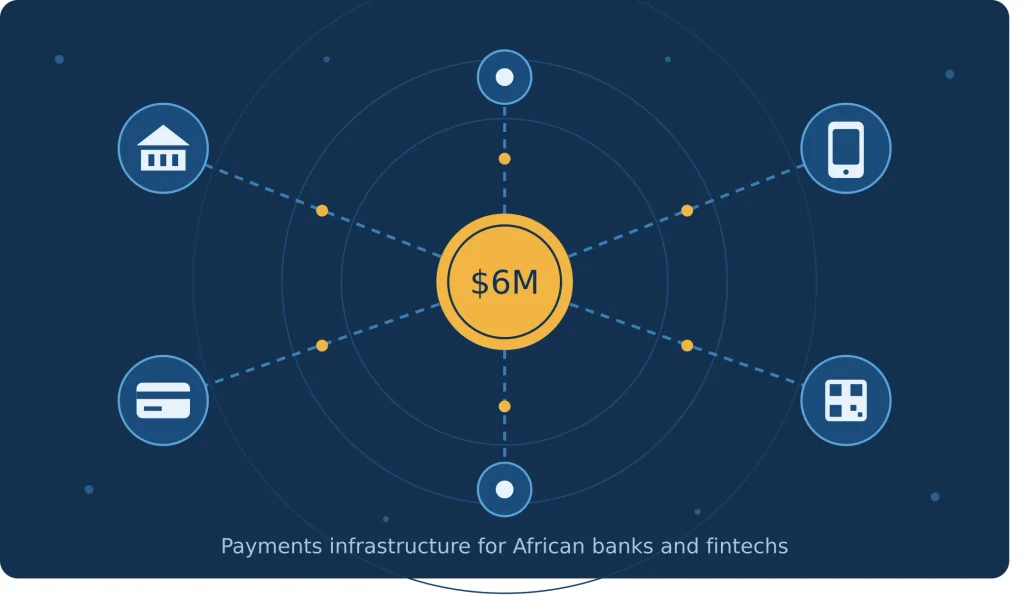
enza offers banks a single integration that connects them to card schemes, real-time payment rails, mobile wallets and QR payments, while allowing banks to keep control of their merchants. Its technology also supports payment acceptance, transaction processing and fraud detection, helping financial institutions modernize their systems while retaining control of their customer relationships and data.
That last point is central to the pitch. Many banks have watched fintechs capture customer relationships and merchant data while the banks themselves are reduced to a back-end role. enza’s model is designed to let banks compete for those merchants rather than hand them over.
Daniel Marlo, Managing Partner at 4DX Ventures, said payments in Africa have moved well beyond cards and are now truly omni-channel, yet the infrastructure banks depend on has not kept pace. In his view, enza fills that gap by letting banks modernise through a single integration while keeping control of their merchants and data. He said 4DX led the round because the founders have done this before.
A founding team that has been here before
The people behind enza are a large part of the investment case. enza was founded by former Network International executives Hany Fekry and Hamish Houston. Fekry previously served as chief commercial officer at Emerging Markets Payments (EMP), which was acquired by Network International, where he later became managing director.
Marlo noted that the founders helped build one of the continent’s leading payment processors, serving banks across more than 40 African markets. After its acquisition, they went on to lead processing and regional operations at one of the region’s largest payments companies. That record, he said, has earned them the trust of banks, card schemes and regulators across Africa, which ultimately determines success in this industry.
Marlo went further and said 4DX believes enza can become the backbone of how money moves across the continent, connecting every bank, merchant and consumer on a single modern network.
From six markets to twelve
enza’s growth since its 2025 seed round has been rapid. That round, worth $6.75 million, was co-led by Algebra Ventures and Quona Capital and was the company’s first external funding. At the time, enza had secured more than 10 million monthly transactions across six African markets: Rwanda, Nigeria, Ghana, Egypt, Uganda and South Africa.
The company now serves bank and fintech clients across 12 African countries. It is headquartered in Abu Dhabi, with regional offices in Egypt, South Africa, Ghana and Nigeria. That footprint gives it a presence in several of the continent’s biggest and fastest-moving payments markets, close to the regulators and bank customers it needs to work with.
The earlier coverage also pointed to the scale of the opportunity. Africa’s digital economy is expanding quickly, and more than 60 million underserved small and medium-sized enterprises represent a significant opportunity. Those businesses often struggle with the cost and complexity of accepting digital payments, and that is the problem the new round is aimed at.
The development finance angle
BII’s participation reflects its focus on inclusive finance. Chirantan Patnaik, Head of Disruptive Ventures at BII, said enza gives banks and financial institutions the modern infrastructure they need to cut costs, broaden payment options and widen access to affordable, reliable financial services across developing markets. He said the investment reflects BII’s interest in supporting SMEs by tackling a major barrier, which is the high cost and complexity of digital payments infrastructure.
For small merchants, lower infrastructure costs can translate into cheaper acceptance, wider payment options at the till and easier access to the formal financial system. Those benefits depend on banks being able to offer modern services, which is the gap enza says it exists to close.
What to watch next
The round is modest by global fintech standards, but it is notable in the context of African venture funding. Backing for infrastructure, the “plumbing” behind digital finance, is less glamorous than consumer-facing apps. It can also be more durable, because infrastructure providers embed themselves deeply in their clients’ operations.
Several questions will shape enza’s next chapter:
- Which markets come next. The company has said it will prioritise countries where digital payments are a national priority, but has not named them.
- How fast licences arrive. Regulatory approvals can take time and vary widely by jurisdiction, and they will largely set the pace of expansion.
- How banks respond. The pitch of modern infrastructure with banks keeping control of their merchants and data will be tested as more institutions weigh the cost of leaving legacy providers.
- Competition. Other payments infrastructure providers are also targeting African banks, so enza’s ability to differentiate will matter.
For now, the company has more capital, a larger and more diverse investor base, and a clear plan for how to spend the money. In a sector where trust, licences and execution decide who wins, those are useful assets to have.
enza is a payments infrastructure provider serving banks and fintechs across Africa. Founded in 2023 by Hany Fekry and Hamish Houston, the company is headquartered in Abu Dhabi, with regional offices in Egypt, South Africa, Ghana and Nigeria. Through a single platform integration, enza connects financial institutions to card schemes, real-time payment rails, mobile wallets and QR payments, and supports payment acceptance, transaction processing and fraud detection. Banks using enza retain control of their merchants, customer relationships and data. The company currently serves clients in 12 African countries.
4DX Ventures is a pan-African venture capital firm founded in 2017 by Walter Baddoo and Peter Orth in New York City, with additional presences in Accra, Cairo and Nairobi. The firm backs early-stage technology founders across sectors such as fintech, e-commerce, health tech and edtech, and works with its portfolio companies on strategy, operations and technical input as well as capital. ifc
British International Investment is the UK’s development finance institution and impact investor, backed by the UK government. It provides patient capital to businesses in Africa, Asia and the Caribbean, with the aim of creating jobs, supporting economic growth and helping build sustainable, inclusive economies.
Quona Capital is a venture capital firm focused on fintech companies serving emerging markets. It invests in businesses that expand financial inclusion and access to financial services for underserved individuals and small businesses.
Algebra Ventures is a Cairo-based venture capital firm that invests in early-stage technology companies in Egypt and the wider region, partnering with founders as they build and scale
Cosmopolitan The Daily is a digital publication that brings readers news, features and analysis across lifestyle, culture, business and technology. Its editorial team aims to make complex topics accessible, spotlighting the people, companies and ideas shaping the world around its readers.