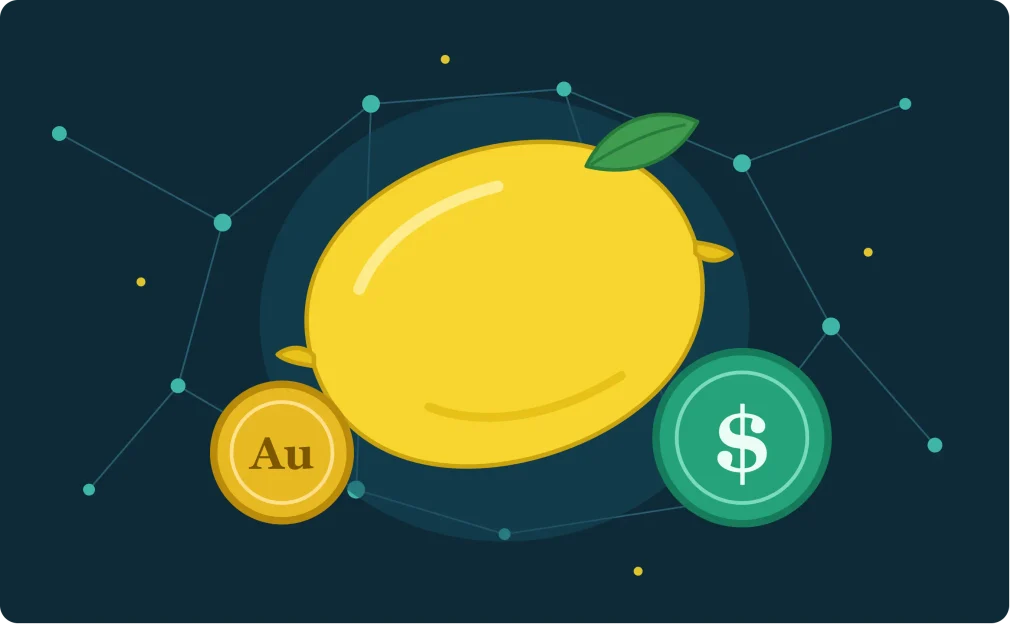
The world’s largest stablecoin issuer has placed another bet on Latin America, and this time the target is a lemon-green app that many Argentines already use to pay, save and send money. Tether, the company behind the USDT stablecoin is investing in Lemon, an Argentine digital-asset fintech, to push its dollar-pegged and gold-backed tokens into routine financial life across the region.
The announcement is small in dollar terms by Silicon Valley standards, but it carries weight for anyone watching how money is changing in emerging markets. It signals that stablecoin firms no longer see themselves only as infrastructure for crypto traders. They want to be present where wages are received, rent is paid, and savings are protected from inflation.
What Tether Is Putting In
According to reporting by Argentine outlet Infobae, the package totals US$14.5 million. Of that, US$5 million is a direct equity investment in Lemon, while the remaining US$9.5 million is earmarked for an incentive program designed to widen the range of digital services on offer and to keep building the infrastructure that links the traditional financial system to USDT.
Tether did not disclose the valuation attached to the investment, a detail that is common in strategic deals of this kind. What the company did stress is the purpose. The two firms want to make two Tether products part of ordinary life in Argentina and beyond: USDT, which tracks the US dollar, and XAUT, a token tied to the price of gold.
Paolo Ardoino, Tether’s chief executive, framed the move as a reflection of how people already behave. In his telling, residents of Argentina and the wider region increasingly use USDT not just to guard their savings but also to get paid, to spend, and to send money across borders. He added that digital dollars, and now digital gold, are becoming a normal part of financial routines.
Meet Lemon: A Wallet That Grew Beyond Crypto
Lemon began as a crypto-focused platform, but its current identity is broader. The company describes itself as a single app where people can hold and manage money, save, earn yield, invest in stocks, make international payments and, in markets where it is available, spend through Visa prepaid virtual cards. It operates in Argentina as well as Peru, Colombia and other markets in the region.
The numbers help explain why Tether found it attractive. Lemon serves about 4.5 million users, and the company says traditional currency processing now accounts for roughly 85 percent of the total value moving through its platform. Over the past three years, the volume handled in Argentine pesos has grown nearly twice as fast as the volume in digital assets. Today, Lemon counts among the wallets with the highest peso volume in the country.
That is a notable evolution for a company once seen mainly as a crypto exchange. It suggests that the app has become a place for everyday money management first, and a gateway to digital assets second. Lemon was also the first wallet in Argentina to let users decide whether to operate in pesos or in crypto, a flexibility the company treats as a core part of its pitch.
Before this round, Lemon had raised US$66 million across two funding rounds. The Tether package builds on that foundation.
The Founder’s Pitch: Make the Technology Invisible
Marcelo Cavazzoli, Lemon’s founder and chief executive, says the partnership is a starting point for challenging traditional banks on their home turf. He told Infobae that Lemon plans to improve its rates, fees and conditions as it develops stablecoin-based products.
His philosophy centers on usability. Cavazzoli argues that the best crypto products are the ones users barely notice. He points to payments made through Pix, Brazil’s instant payment system, which millions of Argentines use while traveling without necessarily realizing that digital assets may be working behind the scenes. For him, the question is not which technology sits underneath, but what people can do with their money.
He also believes Argentina has a historically strong appetite for digital assets and that demand across the region is organic rather than manufactured. Users, he says, do not want to juggle several kinds of money. They want one currency that works for everything.
Other local reports suggest the capital will also help strengthen Lemon’s technology backbone and expand beyond crypto into areas such as credit, payments and artificial intelligence. One report noted that the company is evaluating a move into lending, and another indicated that it is already testing credit products in Argentina. Lemon has not framed these as finished offerings, so readers should treat them as directions of travel rather than launched services.
Why Argentina, and Why Now
Tether’s logic is rooted in the country’s economic history. Persistent inflation and currency volatility have pushed households and businesses toward dollar-linked assets for saving, for sending remittances and for conducting trade. In its own announcement, Tether described stablecoins as both a hedge against instability and a practical everyday payment tool.
The scale of the local market supports that view. Reporting by Infobae put Argentina’s crypto activity at nearly US$90 billion, an increase of 15.3 percent over the past year. For a company whose product is a digital dollar, a market where the real dollar is both coveted and complicated to obtain is a natural fit.
There is also a competitive angle. Argentina’s fintech landscape is crowded, with Mercado Pago the dominant name. Lemon recently signed Argentine media personality and entrepreneur Mario Pergolini as a brand ambassador, using a campaign that nods playfully at the market leader while inviting people to rethink how they handle their money. Lemon’s marketing chief described Pergolini as someone who spoke about the internet before it was widely understood, pioneered streaming and invested in Bitcoin early, a track record the company says mirrors its own appetite for updating old financial structures.
Part of a Larger Latin American Strategy
The Lemon deal does not stand alone. Over the past year, Tether has built a pattern of backing regional fintechs, and each investment adds another doorway for its tokens.
In April 2026, Tether led a US$14 million Series A round for Belo, another Argentine crypto wallet, to accelerate its expansion into Mexico, Chile, Colombia, Peru, Bolivia and Paraguay. Tether also led a pre-seed round in Peso, a Bolivian fintech that is expanding USDT payments across Bolivia, Brazil, Colombia and Argentina.
In July 2026, the company invested US$20 million in Ualá, the Argentine digital bank, as part of a larger US$197 million funding round that valued the firm at US$3.2 billion. That deal came with an important caveat. Ualá’s chief executive, Pierpaolo Barbieri, clarified that Tether was acting purely as a financial investor and that current regional regulations prevented any immediate integration of USDT into the bank’s products.
Tether’s footprint in the country extends beyond finance. Through Tether Investments, a fund of more than US$3 billion, the company acquired a 70 percent stake in Adecoagro, one of the Southern Cone’s main agribusiness firms, in a deal worth more than US$600 million. That position gave Tether indirect exposure to Profertil, a major fertilizer producer. The agricultural move shows that Tether sees Argentina as more than a user market; it is a place to deploy capital across the real economy.
Taken together, these investments sketch a deliberate strategy. Tether is spreading bets across wallets, neobanks and payment startups so that its stablecoins become embedded in multiple channels at once, rather than relying on any single partner.
What It Could Mean for Everyday Users
For the person holding a smartphone in Buenos Aires, Lima or Bogotá, the practical effects will depend on execution, but the direction is clear.
First, cheaper cross-border payments. Sending money abroad through traditional channels is often slow and expensive. Stablecoin rails can settle quickly and at lower cost, and Lemon’s stated aim of improving fees and rates suggests some of those savings may be passed on to users.
Second, easier access to dollar-denominated savings. Users who want to protect their purchasing power can hold USDT inside an app that also handles their pesos, groceries and subscriptions. The addition of XAUT gives a second option for those who prefer gold as a store of value, without needing to buy and store physical metal.
Third, better earning opportunities. Lemon already lets users earn yield, and the incentive program funded by Tether is intended to broaden what the platform can offer. If the incentives translate into attractive rates and promotions, competition among wallets could improve terms across the market.
Fourth, a smoother blend of old and new money. By letting people choose between pesos and crypto inside one app, Lemon points toward a future in which the distinction fades. A user may not care whether a payment travels over a card network, a local rail or a blockchain, so long as it is quick and inexpensive.
The Case for Caution
Enthusiasm should be tempered by realism. Several open questions hang over the deal.
Regulation is the largest. Argentina’s approach to crypto remains in flux, and the Ualá episode shows that rules in the region can limit how directly a stablecoin can be woven into licensed financial products. Mexico’s fintech law, for example, has been cited as a hurdle for direct stablecoin integration inside regulated platforms. Lemon will need to navigate these frameworks country by country as it expands.
Concentration is another concern. Tether’s growing stake in regional fintechs raises the question of how dependent these companies might become on a single stablecoin issuer. Lemon has said it wants users to have a choice of currencies, and it will be worth watching how that principle holds as the partnership deepens.
There is also the question of consumer protection. As wallets move from trading tools to everyday financial hubs, expectations around transparency, customer support and safeguarding of funds rise. Products such as credit, if launched, would add further layers of risk and oversight.
Finally, market conditions matter. Digital asset prices and broader financial markets can swing sharply, and a company that wants to be a daily money tool must perform reliably in both calm and turbulent periods.
What Comes Next
The immediate milestones are likely to be practical ones: new features inside the Lemon app, expanded use of USDT and XAUT for payments and savings, and a steady rollout across markets where the company already operates. Observers will also watch whether Lemon’s reported interest in credit and artificial intelligence turns into concrete products, and whether other regional players follow Tether’s lead.
For Tether, the Lemon investment is another piece of a mosaic. For Lemon, it is both capital and a signal of confidence at a time when it is competing against much larger rivals. For users across Latin America, it is one more step toward a world in which holding digital dollars feels as ordinary as opening a banking app.
Whether that vision materializes will depend less on the headlines and more on the quality of everyday experiences: how fast a payment clears, how clear the fees are, and how safe people feel leaving their savings in a phone. Those are the tests that Lemon and Tether now have to pass, one transaction at a time.
Tether is the issuer of USDT, the world’s largest stablecoin, which is designed to track the value of the US dollar, and of XAUT, a token linked to the price of gold. Led by chief executive Paolo Ardoino, the company positions its digital assets as tools for saving, payments and cross-border money movement, particularly in regions affected by inflation and currency volatility. Through Tether Investments, it also backs companies in financial technology, agriculture and other sectors across Latin America and beyond.
Lemon is an Argentine fintech that brings digital assets and everyday money management into one app. Users can save, earn yield, invest in stocks, send international payments and, where available, spend with Visa prepaid virtual cards. Founded and led by Marcelo Cavazzoli, the company serves roughly 4.5 million users across Argentina, Peru, Colombia and other Latin American markets, and has raised US$66 million in two funding rounds prior to the Tether investment.
Cosmopolitan The Daily is a digital publication delivering news, features and analysis on business, technology for a global, curious audience. Its editorial team aims to explain how markets, innovation and everyday choices connect, with a focus on clear, accurate and engaging storytelling.