Every energy transition story eventually reaches an invoice. A household installs solar panels, signs up for a tariff that follows hourly wholesale prices, or plugs an electric car into a smart charger. At some point, a supplier has to turn all of that into a bill the customer understands and trusts. For many European energy companies, that last step is where their ambitions stall.
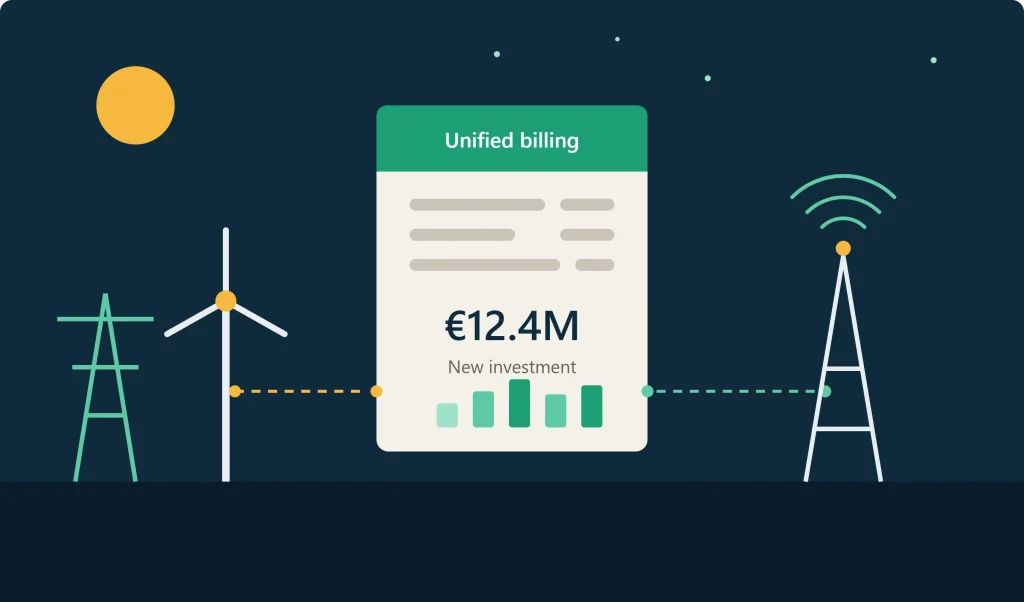
That gap is the opportunity Paris-based triPica has been working on since 2016. The company has now received €12.4 million from TiLT Capital Partners, the energy transition investment platform of the Siparex Group. The money will pay for expansion across the European energy market, and for further growth in telecom.
A Funding Round Aimed at a Very Practical Problem
The announcement, made on 10 November, is not about a flashy consumer product. It concerns the software underneath modern utilities and mobile operators: the systems that store customer records, manage contracts and subscriptions, calculate what each person owes, collect payment and handle service queries.
triPica builds a cloud-native platform that brings customer relationship management and billing into one place. It serves energy suppliers and telecom operators, two industries that look very different from the outside but share a back-office headache. Both sell recurring services, both face customers who expect digital simplicity, and both are under pressure to launch new offers faster than their old systems allow.
According to the company, the new capital will go mainly toward the European energy market. Germany and Italy are the named priorities, alongside triPica’s existing operations in France, and the company says it plans to enter additional European countries. Its telecom business, meanwhile, will keep growing across Europe, the Americas and Asia. A third strand of the plan is putting artificial intelligence to work in billing and customer service, to improve efficiency and reliability.
The Legacy Trap
To see why investors are interested, it helps to look at how energy retail used to work. For decades, a supplier sold electricity or gas at a fairly uniform price, with a small number of tariff options and a monthly or annual bill. The billing systems built for that world were large, rigid and expensive, and they were designed to do a few things reliably.
The market has since moved on. Suppliers are now experimenting with dynamic tariffs that follow wholesale prices, contracts built around rooftop solar self-consumption, plans bundled with electric vehicle charging, and programmes that reward customers for shifting consumption away from peak hours. Each of these ideas sounds simple in a marketing meeting. Each can become a months-long IT project when the billing engine was never built to handle it.
triPica’s chief executive and co-founder, Mathieu Horn, framed the issue in blunt terms. Every new energy offer, he said, eventually becomes a billing problem. In his telling, suppliers do not lack ideas. What slows them down is a customer and billing system designed for a market that no longer exists.
It is a diagnosis many in the industry would recognise. When a system forces a supplier to customise code or wait for a vendor release every time it wants to test a new price structure, innovation becomes slow and costly. Smaller, more agile competitors can then move faster, and customers see little change.
What triPica Says It Does Differently
triPica’s pitch is speed and flexibility. The company says operators using its platform can launch new products and pricing models in weeks rather than months, with far less custom development. The platform covers the full customer lifecycle: relationships, subscriptions, billing, payments and customer service.
Migration is a second selling point, and probably the more important one for cautious utilities. Replacing a billing system is among the riskiest projects an energy retailer can undertake. A mistake can mean wrong invoices for hundreds of thousands of households, angry customers and regulatory scrutiny. triPica says its platform supports the transfer of customer records, contracts and billing histories from existing systems, so that operators can modernise without interrupting day-to-day operations.
The company also leans on its history in telecom. Mobile operators learned long ago to cope with usage-based plans, bundles, digital-only sub-brands and rapid promotional cycles. triPica argues that this experience carries over to energy, helping suppliers introduce flexible pricing, bundled services and new products in a market that is starting to resemble telecom of two decades ago. Horn made a similar comparison in an earlier interview with French Tech Journal, noting that the energy sector was stable for a very long time and that innovation is now arriving all at once.
From Telecom Roots to Energy Ambitions
The company’s origins explain that comparison. triPica was founded in Paris in 2016 by Horn, Walid Bounar and Christophe Ruzé, and it first made its name serving telecom operators. One widely cited example is its work with Bouygues Telecom in France, where it helped launch Source Mobile, an environmentally themed mobile plan that encouraged customers to use less of their data allowance. The project showed how a billing and customer platform can support a new brand and a new way of selling, instead of just processing invoices.
Energy followed as the sector began to change. As telecom moved toward eSIM and digital-first brands, and energy moved toward renewables, smart meters and flexible consumption, the company saw similar needs appear in both industries. Its marketing describes a platform that helps clients monetize emerging technologies, from flexible energy use and renewable energy solutions to virtual batteries and vehicle-to-grid services.
Germany, Italy and the Wider European Map
The decision to name Germany and Italy as priorities reflects both opportunity and groundwork already laid.
triPica has been active in Germany since 2018. Its customers there include the utility enercity and the Stadtwerke of Garbsen, according to company materials. Earlier this year, at the E-world energy and water trade fair in Essen, the company announced an expansion of its German offering aimed at commercial and industrial energy retail. That extension is designed to let suppliers launch, manage and bill sophisticated business-to-business offers, including block-and-spot pricing structures, dynamic tariffs and hybrid contract models. These arrangements are far harder to bill than a standard household tariff.
Germany is also a market where regulation has pushed suppliers toward dynamic pricing. European electricity market rules require larger suppliers to offer dynamic price contracts, and Germany has set its own obligations for suppliers in recent years. Anyone offering such contracts needs billing infrastructure able to handle prices that change by the hour or quarter-hour.
Italy is a newer frontier. In January 2024, triPica announced it was exploring Italian market entry together with the Swiss utility Primeo Energie, which had worked with the company in France since 2022 to deliver an innovative energy offer through customer-centric processes. The fresh funding gives that ambition more weight. France remains the home market, and the company says it intends to add further countries to the list.
Putting AI to Work Where Time Is Lost
The most forward-looking element of the announcement is the planned use of AI. Horn said the company will use it where operators lose the most time today.
In billing and customer service, that probably means the repetitive, error-prone work that consumes staff hours: resolving disputes over unexpected charges, answering routine questions about tariffs, spotting anomalies before invoices go out, and reconciling data between systems. The company’s own statements are brief on specifics, so it is too early to judge how far the technology will go. The stated goals, efficiency and reliability, are the right ones for a function where a single bad invoice can trigger a wave of complaints.
For energy suppliers under cost pressure, the appeal is obvious. Customer contact is expensive, and a market with more complex products generates more questions. Software that reduces both the number of errors and the effort needed to fix them could materially improve margins.
Why an Energy-Transition Investor
The choice of investor tells its own story. TiLT Capital Partners is a French growth-capital firm focused on companies involved in the energy transition. It was created in 2018 and joined the Siparex Group in 2021, becoming the group’s dedicated platform for the sector. In earlier public statements, the firm said it ties part of its own remuneration to the ESG performance of the companies it backs. It has previously invested in energy-sector businesses such as the Norwegian infrastructure-inspection company eSmart Systems, where it led a €30 million round in 2024, and the Spanish off-grid solar specialist Nomad Solar Energy.
Billing software might not sound like a classic climate investment, but the logic is clear. The energy transition depends on millions of households and businesses adopting new behaviours and technologies, and suppliers must be able to sell and charge for those services. If the back office cannot cope, rollouts slow down. Software that lets a supplier turn a new idea into a live tariff in weeks is, in that sense, infrastructure for the transition itself.
Horn said that with TiLT the company will take its platform to more operators across Europe. The financial terms beyond the investment amount were not disclosed in the materials reviewed, including any valuation or ownership stake.
A Crowded but Growing Field
triPica does not operate alone. Several European companies are chasing the same problem. Norwegian firm Utility Cloud raised €7 million in 2025 to modernise energy-sector IT systems, and Cologne-based epilot raised €10 million in 2024 to help utilities and grid operators move off legacy software. Established vendors, meanwhile, continue to compete for large utility contracts. The pattern across these deals is consistent: investors believe that European energy retailers are under pressure to replace ageing systems and that cloud-based platforms can offer a faster path.
What triPica brings to that contest is a dual-industry track record. Whether telecom experience becomes a lasting advantage depends on execution. Energy billing carries regulatory detail, market-specific rules and settlement processes that differ across countries. Expanding into Germany and Italy means adapting to each national framework, and not just translating a user interface.
What to Watch Next
Several questions will shape how this investment plays out.
The first is customer wins. The funding is meant to support expansion, and the real signal will be new supplier contracts in Germany and Italy and any early entries into additional countries. The second is the pace of migrations. Convincing a utility to move away from a long-established system is a slow, trust-driven sale, and reference customers matter. The third is the AI roadmap. Operators will want evidence, such as fewer billing errors, faster resolution times or lower cost to serve, rather than general promises.
There is also the broader market backdrop. As more households adopt solar, batteries, heat pumps and electric vehicles, energy retail will fragment into many more products than the old standard tariff. Telecom, for its part, keeps moving toward bundles, digital brands and usage-based plans. Companies that can bill across both worlds may find themselves well placed.
The Bottom Line
The €12.4 million investment is modest by the standards of the biggest European funding rounds, but it is targeted at a concrete and widely felt problem. Utilities and operators know what new products they want to sell. Their constraint is the machinery that turns those products into accurate, timely bills.
If triPica can show that it lets suppliers launch offers in weeks, migrate safely from legacy systems and use AI to cut routine work, it will have earned its place among the quiet enablers of Europe’s energy transition. For customers, the benefit would be easy to miss: tariffs that fit their lives, and bills that are correct the first time.
triPica is a Paris-based software company founded in 2016 by Mathieu Horn, Walid Bounar and Christophe Ruzé. It develops a cloud-native CRM and billing platform that helps energy suppliers, utilities and telecom operators manage customer relationships, subscriptions, billing, payments and customer service. The platform is designed to let operators launch new products and flexible pricing models quickly and migrate from legacy systems without disrupting operations. triPica serves customers in France, Germany and other markets, and is expanding across Europe, the Americas and Asia.
TiLT Capital Partners is a French growth-capital investor dedicated to the energy transition. Created in 2018, it became the energy transition platform of the Siparex Group in 2021. It invests in fast-growing European companies that contribute to decarbonization and energy efficiency and has said it links part of its remuneration to the ESG performance of its portfolio companies.
Siparex is an independent French private equity group. It backs small and mid-sized companies through a range of investment strategies, including growth capital, and runs TiLT Capital Partners as its energy transition platform. Please confirm current assets under management with Siparex before publication.
Cosmopolitan The Daily is a digital publication delivering daily news, features and analysis for readers who want to stay informed about culture, business, technology and the issues shaping modern life.