A fintech app born in the Argentine city of Rosario is about to become the cornerstone of one of the world’s best-known investing platforms. eToro, the Nasdaq-listed trading and investing company, announced an agreement to acquire LB Finanzas, an Argentine all-in-one financial app, and said Argentina will serve as its regional hub for Latin America.
The financial terms were not disclosed, and the transaction remains subject to customary closing conditions, with no completion date announced. Even so, the strategic message is hard to miss. After years of serving Latin American customers largely from a distance, eToro is now committing to a local presence: a local team, local licences and a local product, in a market where everyday savers have long been unusually inventive about protecting and growing their money.
For readers who follow money, markets and the way technology is reshaping both, the deal is worth understanding on several levels. It is a story about a Latin American startup finding a global partner, about a global platform buying its way into a regulation-heavy market, and about a country whose retail investing boom has quietly become one of the most interesting in the world.
The deal at a glance
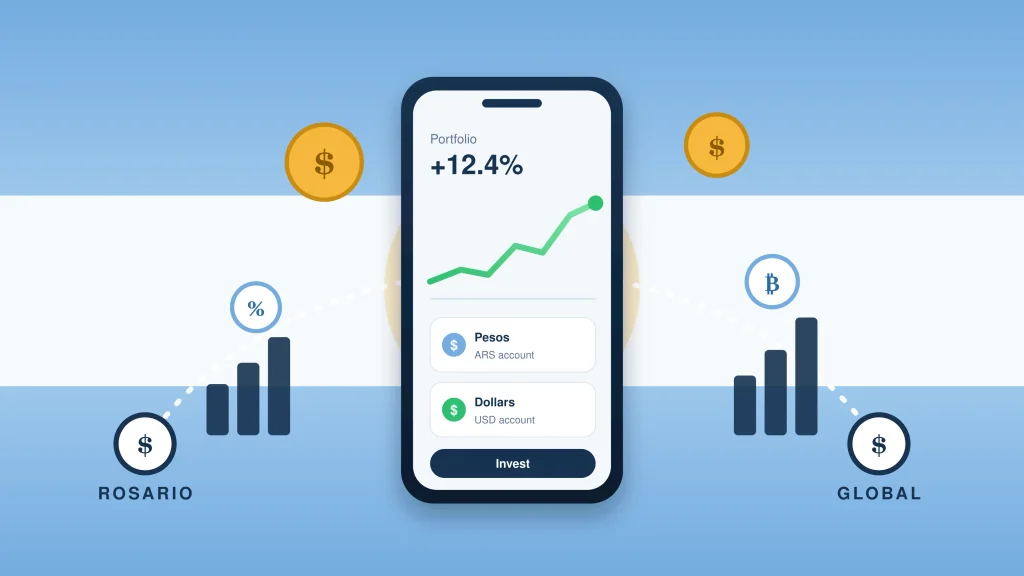
Under the agreement, eToro will acquire LB Finanzas, which describes itself as an Argentine financial app on a mission to give everyone in Latin America access to world-class investing. The companies said the combination will pair LB Finanzas’ integrated platform, which includes accounts in both Argentine pesos and US dollars, with eToro’s international, multi-asset product range and resources.
Yoni Assia, eToro’s co-founder and chief executive, said the two companies share a conviction that everyone should have access to the tools and knowledge needed to grow their wealth. Combining LB Finanzas’ local expertise with eToro’s global scale and product range, he said, would let the group bring that mission to millions of people across one of the world’s most dynamic regions. He called the acquisition an important step in eToro’s commitment to building a localized presence in Latin America, and said LB Finanzas’ comprehensive platform would help the company move faster and go further across the region.
Camilo Cristia, co-founder and chief executive of LB Finanzas, presented the deal as a way to stretch the company’s founding idea much further: that any Argentine should be able to invest with the same tools people use internationally. For existing customers, his message was continuity. “For our clients, nothing changes today,” he said, adding that what comes next is more products and more scale, delivered by the same team users already know.
From a Rosario crypto exchange to a regulated financial “Swiss Army knife”
LB Finanzas began in 2018 in Rosario, the Santa Fe province city on the banks of the Paraná River that is better known in global culture for football and literature than for financial technology. Local reporting describes the company as the work of four students who started out with a cryptocurrency exchange called Let’sBit. In the years since, the business has steadily widened its remit.
The turning point came in October 2024, when the company changed its name to LB Finanzas after securing a brokerage licence, known in Argentina as a sociedad de bolsa, from the National Securities Commission, the CNV. That licence allowed it to offer stocks and bonds through its own regulated entity rather than relying on partners. Argentine business outlet iProUP has since likened the app to a financial Swiss Army knife, and the description fits: LB Finanzas now lets individuals and businesses invest in US stocks and ETFs, buy and sell crypto assets, and park money in money market funds, while holding balances in both pesos and dollars, all within a single app.
The company is regulated by both the CNV and Argentina’s Central Bank, the BCRA, and operates under three registrations that matter a great deal in this market. It is a settlement and clearing agent, known by the Spanish acronym ALyC. It is a payment service provider, or PSP. And it is a virtual asset service provider, or PSAV. Taken together, those permissions cover most of what a modern financial app needs short of a full banking licence, which one of its co-founders, Santos Barrio, has said the company has even considered pursuing.
That regulatory footprint may be the most valuable thing eToro is buying. Building licences from scratch in a new country is slow, expensive and uncertain. Acquiring a company that already holds them, and already has a working product and a customer base, offers a far shorter route to market.
The customer base itself has grown quickly. Local media reported earlier this year that the app had passed 130,000 users in Argentina, and the company now describes its community as hundreds of thousands of users. In 2025, LB Finanzas also launched a product that lets Argentines buy US stocks, bonds and ETFs directly through an account of their own, with minimum amounts reported to start at just 2,000 pesos, a deliberately low entry point aimed at small savers.
Why Argentina, and why now
To outsiders, Argentina’s economy can look like a cautionary tale. To fintech builders, it looks like a laboratory. Decades of inflation and currency volatility have taught generations of Argentines to think in terms of dollar-denominated savings and to look beyond local assets, and that habit has produced unusually high awareness of how markets work.
The numbers back that up. According to figures from the Argentine exchange operator Bolsas y Mercados Argentinos, more than 12.3 million people now hold an investment account with a broker, the key that lets them trade on the local market. That equals roughly 55 percent of the economically active population. The number of such accounts has reached about 24.6 million, up 35 percent in a single year, and more than a million of them hold CEDEARs, the certificates that let Argentines buy shares of foreign companies through the local market.
In other words, Argentina has already done much of the work that fintech companies in other countries spend years and large marketing budgets trying to achieve: it has persuaded ordinary people to invest. What is still evolving is the quality of the tools they use. That is the gap eToro says it wants to fill.
Tali Salomon, eToro’s director for Iberia and Latin America, sees the move through a personal lens. She grew up in Rosario, the same city where LB Finanzas was founded and said she has a strong affinity with its founders and knows first-hand how badly Argentines want better financial products. The acquisition, she said, gives eToro the platform to answer that demand at scale. Argentina, in her words, is not only the company’s gateway to Latin America but the base on which it will build across the region, and she described the move as something like coming home.
What changes, and what doesn’t, for users
For the people who already use LB Finanzas, the short-term answer from both companies is reassuringly dull: nothing changes today. Funds, accounts and the team behind the app remain as they are while the deal moves toward completion.
The longer-term answer is more interesting. eToro’s pitch to its global customers is a platform where people can trade, invest and spend. On eToro, users can hold a range of traditional and innovative assets and choose how they invest: trading directly, putting money into a ready-made portfolio, copying the trades of other investors, or handing the job to an AI agent. LB Finanzas’ customers can reasonably expect some of those features to arrive in Argentina over time, though neither company has published a product roadmap or a timetable.
That combination is potentially powerful. LB Finanzas brings a local product with peso and dollar accounts, local payments and local compliance. eToro brings a social investing community, a broad menu of assets and the engineering resources of a company that now serves millions of people worldwide.
As with any investment product, users should keep in mind that returns are never guaranteed. eToro notes that it is a multi-asset platform, that the value of investments can go up or down, and that customers’ capital is at risk.
The scale behind the buyer
The acquirer is no small player. Founded in 2007 with the vision of a world where anyone can trade and invest in a simple and transparent way, eToro is now a regulated, Nasdaq-listed platform used by millions of people in 75 countries. The company went public on the Nasdaq in 2025, and it says it has roughly 4.36 million funded accounts, up 18 percent from a year earlier, along with about 40 million registered users and around 20.2 billion dollars in client assets.
Its regulatory footprint is correspondingly broad. The group’s entities are authorized and regulated by authorities including the Financial Conduct Authority in the United Kingdom, the Cyprus Securities and Exchange Commission, the Australian Securities and Investments Commission, the Seychelles Financial Services Authority, the Financial Services Regulatory Authority of Abu Dhabi Global Market and the Monetary Authority of Singapore.
What distinguishes eToro from many traditional brokers is its emphasis on community. The platform was built around the idea that people learn to invest better when they can see what others are doing, discuss ideas and, if they choose, mirror the strategies of experienced traders. More recently, the company has layered AI-powered tools on top of that community.
A year of deal-making
The LB Finanzas agreement is eToro’s fourth acquisition of 2026, which shows how deliberately the company is using deals to broaden its reach.
In April, it agreed to acquire Zengo, a provider of self-custodial crypto wallets. In May, it acquired Bit2C, an Israeli crypto exchange. In August, it announced an agreement to acquire TradeZero, a US brokerage. Now comes an Argentine all-in-one financial app. Each deal adds something different: wallet technology, exchange infrastructure, a US broker-dealer capability and, with LB Finanzas, a ready-made foothold in one of the world’s most active retail investing markets.
eToro has said it is in a strong financial position and is committed to both organic and inorganic expansion in support of its strategy. The pattern suggests a company that sees acquisitions not as occasional opportunities but as a core growth tool, particularly in markets where regulation and local know-how are the main barriers to entry.
What to watch next
Despite the enthusiasm in the announcement, plenty of questions remain, and the most important ones will only be answered over the coming months.
The first is timing. The companies have said only that the deal is subject to customary closing conditions. They have not said which approvals are required or when completion is expected. Because LB Finanzas operates under licences from Argentine regulators, observers will be watching for how the process unfolds.
The second is integration. Merging a local app with a global platform is rarely seamless. Users will want to know whether the LB Finanzas brand will remain, how eToro’s features will fit alongside the existing peso and dollar accounts, and whether the local team will keep the autonomy that helped the app grow. Cristia’s emphasis on the same team and the same product experience suggests the intention is to preserve what already works.
The third is competition. Argentina’s financial sector is crowded, with established banks, digital wallets, local brokers and other international platforms all courting the same savers. A well-funded global entrant raises the stakes for everyone, which could ultimately benefit customers through lower costs and better tools.
The fourth is the economic backdrop. Argentina’s markets have a history of sharp swings, and the same volatility that makes investing there attractive can also make it unforgiving. A regional hub built in Argentina will have to prove it can serve customers well in good times and bad.
The bigger picture
Zoom out, and the deal reflects a broader shift in how global financial platforms think about Latin America. For years, the region was served mainly through cross-border accounts, English-language apps and a patchwork of partnerships. The new approach, visible in eToro’s announcement, is to build locally: acquire a licensed operator, hire local talent, and design products around local needs such as peso accounts, local payment rails and access to international assets without the friction of opening an overseas account.
For Argentina, the deal is also a vote of confidence in its fintech ecosystem. A startup founded by students in a provincial city has become a strategic asset for a Nasdaq-listed company, and its founders will now have the chance to scale their idea across a region of hundreds of millions of people.
For investors and savers, the takeaway is more practical. Competition among platforms tends to push features up and fees down, and access to global markets is steadily becoming a baseline expectation rather than a privilege. Whether eToro and LB Finanzas deliver on their promise will depend on execution, but the direction of travel is clear.
As always, anyone considering investing should do their own research, understand the risks, and never put in more than they can afford to lose.
eToro is the platform where you can trade, invest and spend. Founded in 2007 with the vision of a world where everyone can trade and invest in a simple and transparent way, it has built a regulated, Nasdaq-listed platform used by millions of people in 75 countries. By combining the collective intelligence of its community with AI-powered tools, eToro has created a collaborative investment community designed to help people grow their knowledge and wealth. On eToro, users can hold a range of traditional and innovative assets and choose how they invest: trade directly, invest in a portfolio, copy other investors, or invest with an AI agent.
LB Finanzas is an Argentine financial app on a mission to give everyone in Latin America access to world-class investing. Founded in Rosario in 2018, it lets hundreds of thousands of users invest in US stocks and ETFs, crypto and money market funds, and hold Argentine peso and US dollar accounts, all in a single app for both individuals and businesses. LB Finanzas is regulated by Argentina’s National Securities Commission (CNV) and by the Central Bank (BCRA).
Cosmopolitan the Daily is a digital publication delivering daily coverage for a modern, globally minded audience. From business, technology and finance, our editorial team curates the stories that matter, with a focus on clear, engaging reporting that helps readers understand the world around them and make informed decisions in their everyday lives.