A new chapter for renewables in Malaysia
Malaysia’s push toward a lower-carbon economy is accelerating—and one of the most visible symbols of that shift is emerging on water.
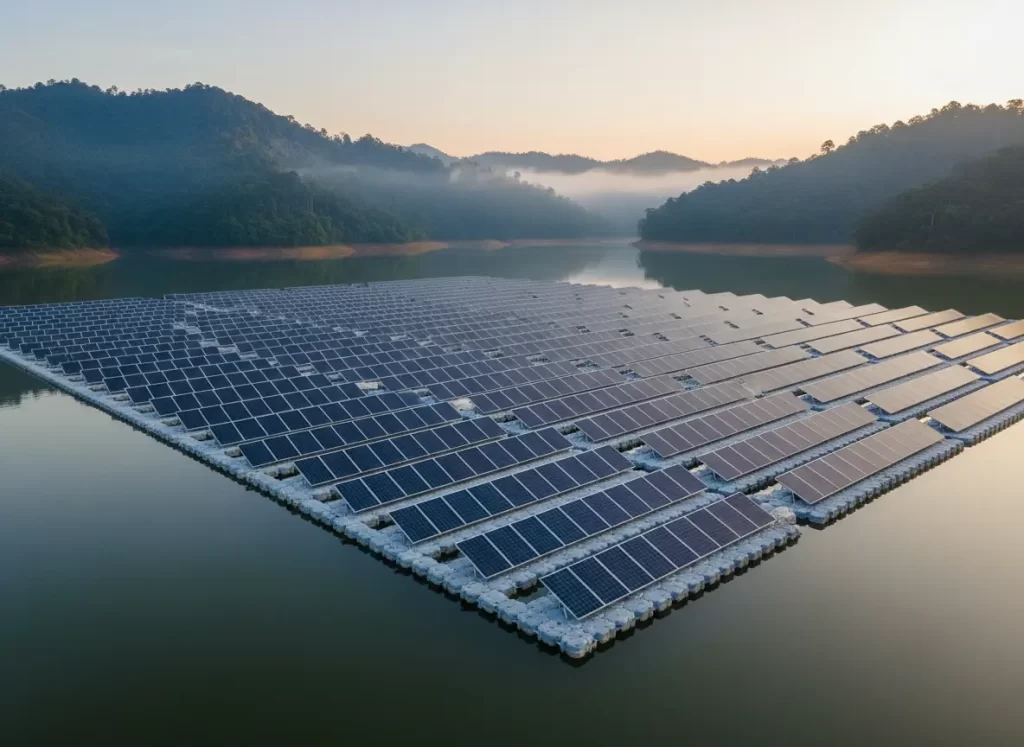
In Pahang, the floating solar development at Chereh Dam is drawing attention for a simple reason: it uses existing water surfaces to generate clean electricity without competing for scarce land. As the country expands its renewable energy portfolio, projects like this help translate national targets into real, measurable infrastructure.
Why floating solar matters
Floating solar (also called floating photovoltaic, or FPV) places solar panels on buoyant platforms anchored on reservoirs, lakes, or dams. The concept is gaining traction across Asia because it addresses two persistent challenges at once: land constraints and growing power demand.
For Malaysia—where urban expansion, agriculture, and conservation all compete for space—FPV can be a practical way to scale solar capacity.
Key advantages often associated with floating solar include:
- Reduced land-use pressure: Reservoir-based installations avoid displacing farmland or development land.
- Potential efficiency gains: Panels can operate at lower temperatures over water, which may support better performance.
- Water management benefits: Coverage can reduce evaporation and limit algae growth, depending on design and local conditions.
Chereh Dam: strategic location, strategic impact
Chereh Dam’s setting in Pahang positions it well for renewable infrastructure that can serve both regional needs and national ambitions. Reservoirs offer stable surfaces, proximity to transmission corridors in many cases, and a controlled environment for maintenance and monitoring.
While floating solar projects vary widely in scale, their broader value is consistent: they diversify generation sources and strengthen grid resilience by adding more distributed clean power.
Supporting Malaysia’s green energy goals
Malaysia’s energy transition is not just about adding renewables—it’s about doing so efficiently, reliably, and at speed. Floating solar can contribute to that agenda by:
- Expanding solar deployment options beyond rooftops and ground-mounted farms
- Reducing project friction where land acquisition is complex or slow
- Encouraging hybrid infrastructure (e.g., pairing FPV with hydropower reservoirs where feasible)
In practical terms, each successful FPV project builds confidence for the next—improving permitting playbooks, strengthening local supply chains, and expanding technical expertise.
What comes next
As Malaysia continues to balance energy security with decarbonisation, FPV projects like the Chereh Dam installation may become increasingly common—especially in states with suitable reservoirs and strong demand growth.
The bigger story is not only the technology itself, but what it represents: a shift toward smarter use of existing assets. When water bodies can double as clean energy platforms, the country gains a scalable pathway to grow renewables while protecting land for communities, food systems, and nature.
Bottom line
Chereh Dam’s floating solar development in Pahang highlights a pragmatic direction for Malaysia’s renewable future—one that aligns infrastructure expansion with environmental priorities. As the nation works toward its green energy goals, floating solar offers a compelling model: low land impact, high visibility, and a clear signal that the transition is underway.
Cosmopolitan The Daily provides comprehensive business news coverage across Finance, Technology, Energy, and Real Estate sectors, serving business leaders and decision-makers globally from offices in Bangalore, New York, Toronto, London, Dubai, Kuala Lumpur, and Sydney.