Major Canadian carriers are setting their sights on Latin America, signaling a significant shift in North American aviation strategy as airlines seek to capitalize on growing demand for travel between the two regions.
Canada’s leading airlines are preparing to launch an ambitious expansion into Latin American markets, with industry insiders suggesting the move could reshape continental air travel patterns and create new economic corridors between North and South America.
Strategic Market Entry
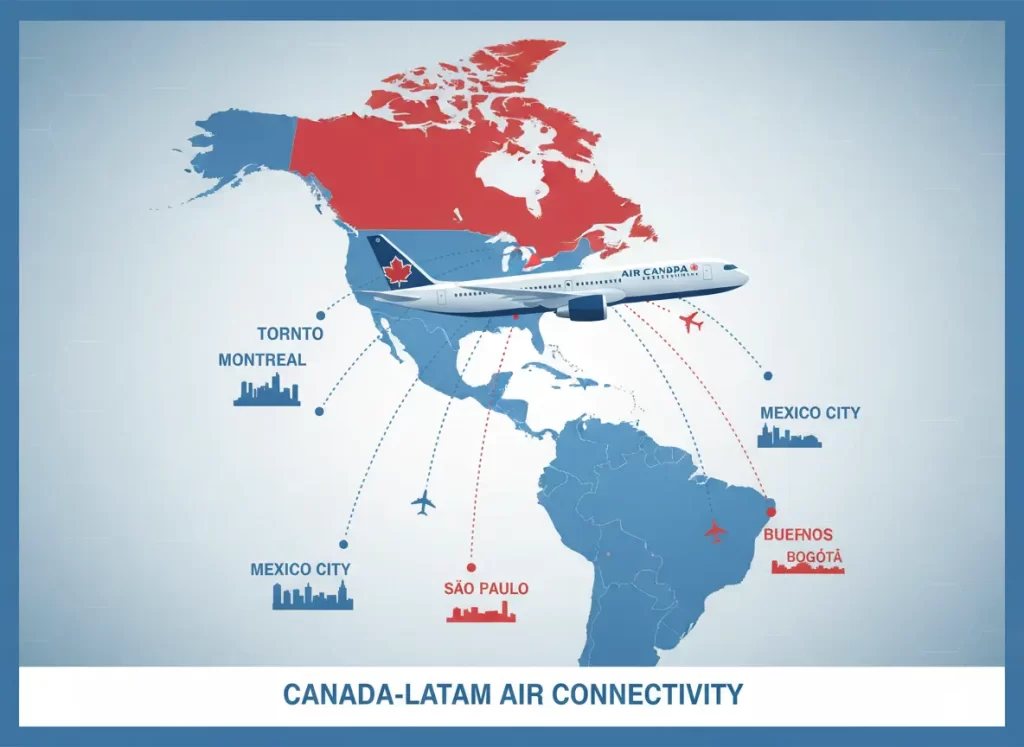
Air Canada and WestJet, the country’s two largest carriers, are reportedly in advanced stages of planning new routes to key Latin American destinations including Mexico City, São Paulo, Buenos Aires, and Bogotá. The expansion comes as Canadian airlines look to diversify their international portfolios and tap into the region’s growing middle class.
“Latin America represents one of the most significant growth opportunities for Canadian aviation,” said industry analysts. “The region’s economic development, combined with increasing business ties and tourism demand, creates a compelling case for expansion.”
Route Network Development
The planned expansion is expected to include both leisure and business-focused routes, connecting major Canadian hubs in Toronto, Montreal, and Vancouver with Latin American commercial centers. Airlines are also exploring secondary markets in Central America and the Caribbean to establish comprehensive regional coverage.
Direct flights to destinations such as Lima, Santiago, and Panama City are under consideration, with some routes potentially launching as early as next year. The expansion would significantly reduce travel times for passengers currently forced to connect through US hubs.
Economic Implications
The aviation expansion is expected to boost bilateral trade between Canada and Latin American nations, facilitating easier movement of business travelers and strengthening economic partnerships. Tourism industries on both sides stand to benefit substantially from improved connectivity.
Canadian exporters, particularly in the technology, mining, and agricultural sectors, have long sought better transportation links to Latin American markets. The new routes could provide crucial infrastructure for expanding trade relationships.
Competitive Landscape
The move positions Canadian carriers to compete more effectively with US airlines that have historically dominated North-South American routes. By offering direct connections from Canadian cities, airlines can capture market share from passengers who previously traveled through American hubs.
Latin American carriers including LATAM Airlines and Avianca have expressed interest in codeshare agreements with Canadian partners, potentially creating integrated networks that benefit travelers across the hemisphere.
Infrastructure and Investment
The expansion plans require significant capital investment in aircraft, crew training, and ground operations. Airlines are evaluating fleet requirements, with some considering deploying newer, fuel-efficient aircraft on longer Latin American routes to optimize operational costs.
Airport authorities in Toronto, Montreal, and Vancouver are preparing for increased international traffic, with terminal expansions and enhanced customs facilities under discussion to accommodate growing passenger volumes.
Market Timing
The expansion comes as international travel continues its post-pandemic recovery, with Latin America showing particularly strong rebound momentum. Airlines are positioning themselves to capture pent-up demand for both leisure travel and business connections.
Industry observers note that timing is critical, as airlines must balance expansion ambitions with economic uncertainties and fluctuating fuel costs. However, the long-term growth trajectory for Latin American aviation remains positive.
Regulatory Considerations
Successful implementation of the expansion depends on securing necessary bilateral air service agreements and regulatory approvals from aviation authorities in multiple countries. Canadian and Latin American governments have been engaged in ongoing negotiations to liberalize air service arrangements.
The expansion represents a strategic bet on growing economic integration across the Americas, with aviation serving as a critical enabler of closer ties between Canada and Latin American nations.
As planning continues, the aviation industry watches closely to see how this major expansion unfolds and what it means for the future of hemispheric air travel connectivity.
Cosmopolitan The Daily provides comprehensive business news coverage across Finance, Technology, Energy, and Real Estate sectors, serving business leaders and decision-makers globally from offices in Bangalore, New York, Toronto, London, Dubai, Kuala Lumpur, and Sydney.