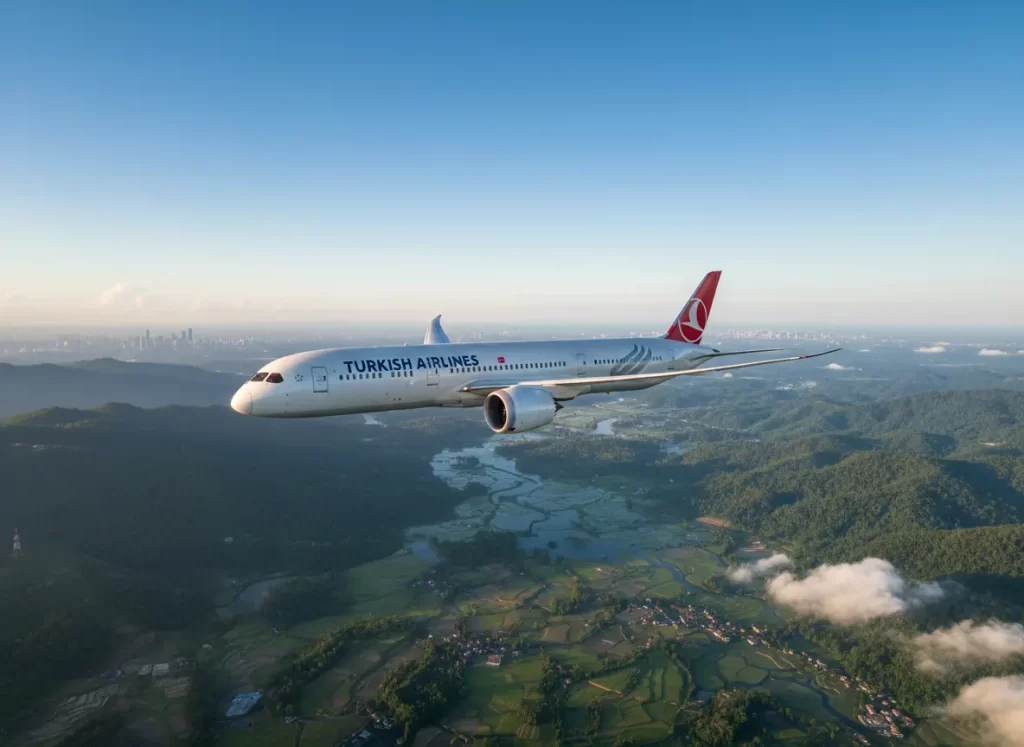
Turkish Airlines, the flag carrier of Turkey, has announced a significant expansion of its Southeast Asian operations, reinforcing its position as a leading global aviation player connecting Europe, Asia, and beyond.
The Istanbul-based carrier is strengthening its presence in one of the world’s fastest-growing aviation markets, responding to increasing demand for connectivity between Turkey, Europe, and the dynamic economies of Southeast Asia.
Strategic Network Enhancement
The expansion comes as part of Turkish Airlines’ broader strategy to enhance its global network and capitalize on growing travel demand in the Asia-Pacific region. Southeast Asia, with its robust economic growth and expanding middle class, represents a crucial market for international carriers seeking to establish competitive advantages in long-haul operations.
Turkish Airlines’ hub in Istanbul provides a strategic geographical advantage, positioning the carrier as a natural bridge between East and West. The expansion of Southeast Asian routes leverages this advantage, offering passengers seamless connections between the region and destinations across Europe, Africa, and the Americas.
Growing Connectivity
The network expansion is expected to include increased frequencies on existing routes and potentially new destinations within the Southeast Asian region. This move aligns with the airline’s commitment to providing passengers with greater flexibility and choice in their travel options.
Industry analysts view the expansion as a strategic response to the region’s post-pandemic travel recovery, which has seen passenger numbers surge as restrictions ease and business travel resumes. Southeast Asia’s tourism sector has rebounded strongly, with countries like Thailand, Singapore, Malaysia, and Indonesia experiencing significant increases in international arrivals.
Competitive Positioning
Turkish Airlines faces competition from established carriers in the region, including Singapore Airlines, Thai Airways, and Malaysia Airlines, as well as Gulf carriers like Emirates and Qatar Airways that also serve as connecting hubs between Europe and Asia.
However, Turkish Airlines’ competitive pricing, modern fleet, and extensive European network provide distinct advantages. The carrier operates one of the youngest fleets in the aviation industry and has consistently invested in passenger experience enhancements, from in-flight entertainment to culinary offerings.
Economic Impact
The expansion is expected to generate positive economic impacts for both Turkey and Southeast Asian destinations. Enhanced air connectivity typically stimulates tourism, facilitates business travel, and supports trade relationships between regions.
For Southeast Asian economies, improved connections to European markets through Istanbul can boost tourism revenues and strengthen commercial ties. Turkish businesses also stand to benefit from easier access to the rapidly growing Southeast Asian market, which is home to over 650 million people and represents a combined GDP exceeding $3 trillion.
Fleet and Service Standards
Turkish Airlines has built its reputation on service quality and operational reliability. The carrier’s modern fleet includes Boeing 787 Dreamliners and Airbus A350s for long-haul operations, offering passengers enhanced comfort and fuel efficiency on extended flights between Istanbul and Southeast Asian destinations.
The airline’s commitment to passenger experience extends to its business class product, which has received industry recognition, and its economy class service, which exceeds many competitors’ standards on long-haul routes.
Future Outlook
As global aviation continues its recovery trajectory, Turkish Airlines’ Southeast Asia expansion positions the carrier to capture growing market share in a strategically important region. The move demonstrates confidence in long-term travel demand and reflects the airline’s ambition to compete with the world’s leading carriers.
Industry observers will be watching closely to see how the expansion unfolds and whether Turkish Airlines can successfully leverage its geographical advantages to build a sustainable competitive position in the Southeast Asian market.
The expansion also signals broader trends in global aviation, where carriers are increasingly focusing on Asia-Pacific routes as the region’s economic growth drives travel demand and creates opportunities for airlines willing to invest in long-term network development.
With this latest move, Turkish Airlines continues to solidify its reputation as a truly global carrier, connecting continents and cultures while pursuing ambitious growth in one of the world’s most dynamic aviation markets.
Cosmopolitan The Daily provides comprehensive business news coverage across Finance, Technology, Energy, and Real Estate sectors, serving business leaders and decision-makers globally from offices in Bangalore, New York, Toronto, London, Dubai, Kuala Lumpur, and Sydney.