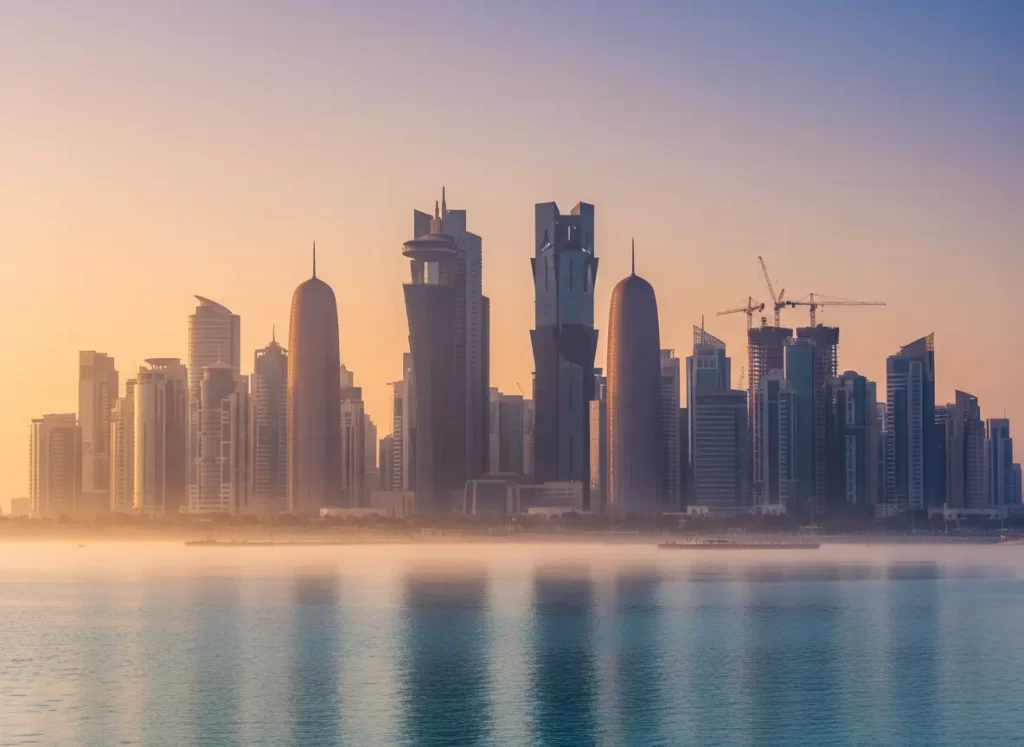
Qatar’s real estate market is entering 2026 on firmer footing than many regional peers, supported by a maturing post–FIFA World Cup landscape, sustained infrastructure investment, and a policy environment designed to attract long-term residents and global capital. While pricing and demand vary by submarket, the overarching direction is clear: the sector is shifting from event-driven momentum to fundamentals-led growth.
A post-event market that is finding its equilibrium
The years immediately following major global events often test a property market’s durability. In Qatar, the transition has been marked by a gradual rebalancing rather than a sharp correction. Developers, landlords, and investors have been adapting to a more normalized demand curve—one shaped by population dynamics, employment trends, and the country’s broader economic diversification agenda.
This normalization is important for 2026 because it signals a market that is increasingly driven by end-user needs and institutional decision-making, not short-term speculation.
Infrastructure and urban planning continue to anchor confidence
Qatar’s long-term infrastructure strategy remains a central pillar for real estate sentiment. Transport connectivity, upgraded road networks, and the continued evolution of mixed-use districts are strengthening the investment case for both residential and commercial assets.
For buyers and tenants, improved liveability and mobility have become key decision factors—particularly in a market where quality of life, community planning, and access to services increasingly influence pricing power.
Demand is becoming more segmented—and more predictable
As the market matures, demand is becoming more clearly segmented by:
- Location and connectivity (proximity to business districts, metro access, and lifestyle hubs)
- Asset quality (newer stock, amenities, and building management standards)
- Tenant profile (corporate leasing, long-term residents, and internationally mobile professionals)
This segmentation is creating clearer winners and losers across submarkets. For investors, that means underwriting decisions in 2026 will depend less on broad market narratives and more on micro-level fundamentals—occupancy resilience, tenant retention, and the long-term competitiveness of specific districts.
Policy signals and foreign investor access remain key tailwinds
Qatar’s efforts to position itself as a globally connected business and lifestyle destination continue to support real estate confidence. Policies that facilitate longer-term residency pathways and improve investor access to property ownership have helped broaden the buyer base and strengthen the market’s international visibility.
For 2026, the strategic question for stakeholders is how effectively these policy tailwinds translate into sustained absorption—particularly in premium segments where global capital is most active.
Commercial real estate: focus on quality and flexibility
On the commercial side, occupiers are increasingly prioritizing efficiency, flexibility, and quality-of-space. This is pushing demand toward well-managed, modern buildings and mixed-use environments that support employee experience and operational agility.
Landlords and developers entering 2026 with competitive assets—and a willingness to structure leases around occupier needs—are better positioned to defend occupancy and maintain stable yields.
What to watch in 2026
Three indicators will shape market sentiment through 2026:
- Absorption vs. new supply in key residential and mixed-use districts
- Rental stability and renewal behaviour, particularly among corporate tenants
- Investor appetite for income-producing assets, influenced by regional interest rates and global risk sentiment
The market’s “robust foundation” will ultimately be measured by how consistently it converts these indicators into stable performance—rather than short-lived spikes.
Outlook: a fundamentals-led market with selective opportunity
Qatar’s real estate market enters 2026 with a stronger structural base than in previous cycles: better infrastructure, clearer policy direction, and increasingly sophisticated demand. The opportunity set is likely to be selective—favouring high-quality assets, well-located developments, and operators who can compete on service and long-term value.
For investors and industry stakeholders, the message is pragmatic: the next phase is less about headlines and more about execution.
Cosmopolitan The Daily is a global business publication covering Finance, Technology, Energy, Real Estate, and other high-impact sectors. We deliver breaking news, in-depth insights, and executive-focused analysis for directors and decision-makers across major markets. With teams operating across seven global offices, we bring a global-local perspective to the stories shaping business and investment worldwide.