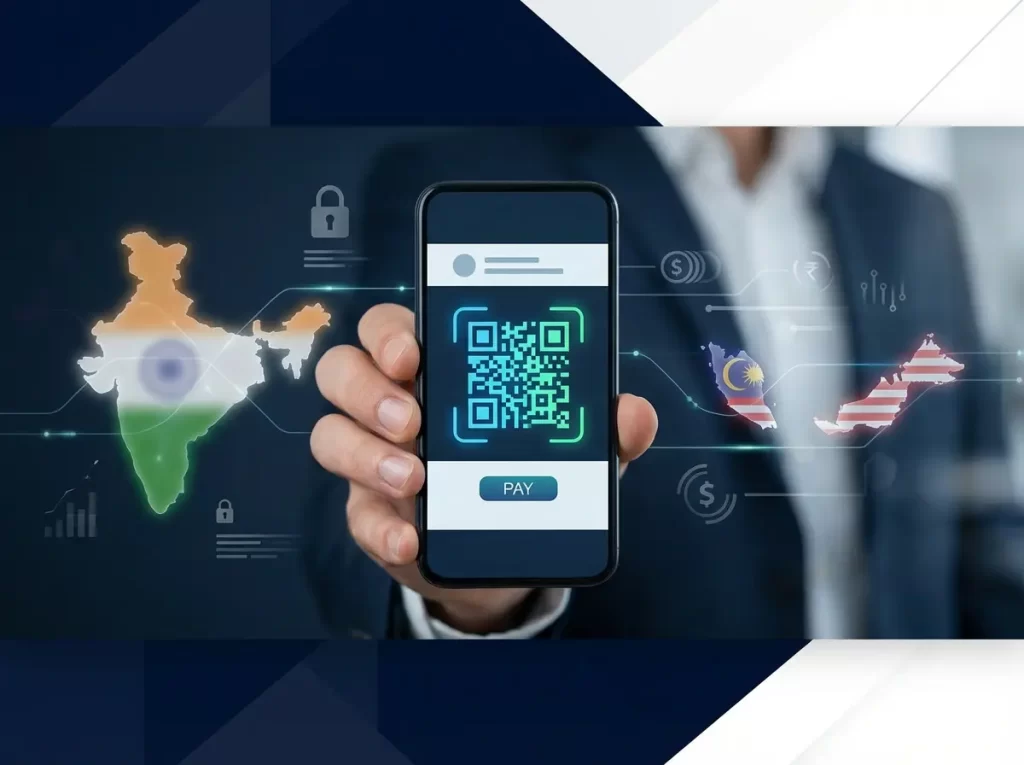
India’s Unified Payments Interface (UPI) is set to expand its international footprint with an upcoming launch in Malaysia, enabled through a linkage with Malaysia’s national payments network, PayNet. The move signals another step in the globalisation of real-time, account-to-account payments—bringing faster, lower-friction transactions to consumers and merchants across borders.
What the UPI–PayNet linkage means
UPI has become India’s dominant retail payments rail by enabling instant bank-to-bank transfers via mobile apps, with simple identifiers such as phone numbers or virtual payment addresses. By connecting with PayNet—an operator at the centre of Malaysia’s domestic payments ecosystem—the new arrangement is expected to support interoperable payments between the two markets.
For users, the practical impact is straightforward: everyday payments could become easier for travellers, students, and professionals moving between India and Malaysia, while merchants may benefit from quicker settlement and reduced dependency on cash or card-based rails.
Why Malaysia matters for UPI’s international expansion
Malaysia is a strategically important corridor for cross-border retail payments, supported by strong trade links, tourism flows, and a sizeable Indian diaspora. A UPI-enabled pathway—working in tandem with PayNet’s local infrastructure—could help reduce friction in small-value transactions such as dining, transport, retail purchases, and peer-to-peer transfers.
More broadly, the linkage reflects a wider regional trend: payment systems are increasingly being connected across borders to improve interoperability, enhance transparency, and strengthen the resilience of digital commerce.
Implications for businesses and the payments industry
For merchants, especially those serving international customers, interoperable QR and real-time payment options can translate into:
- Higher conversion at checkout through familiar payment experiences
- Lower operational friction compared to handling cash
- Potentially improved settlement speed versus some traditional rails
For the payments industry, the development reinforces the growing role of national instant-payment systems as foundational infrastructure—similar to how card networks shaped global commerce in earlier decades.
What to watch next
Key details to monitor as the rollout progresses include:
- Coverage across participating banks and payment apps
- Merchant acceptance expansion and QR interoperability
- Transaction limits, fees (if any), and consumer protections
- Compliance and operational frameworks governing cross-border flows
As real-time payments become a baseline expectation, linkages such as UPI–PayNet may increasingly shape how consumers and businesses transact across Asia.
About Cosmopolitan The Daily
Cosmopolitan The Daily is a global business publication delivering authoritative, fact-driven coverage for senior leaders across Finance, Technology, Energy, and Real Estate. With teams across New York, Toronto, London, Dubai, Bangalore, Kuala Lumpur, and Sydney, we combine local insight with international perspective—supported by our established Business Excellence Awards platform that recognises organisations worldwide.