Flutterwave has acquired Mono, a prominent open banking infrastructure provider, in a move that underscores the accelerating consolidation of Africa’s fintech ecosystem. The deal is expected to strengthen Flutterwave’s ability to deliver bank-to-bank payments, improve data connectivity across financial institutions, and expand access to account-based payment rails for businesses operating across the continent.
The acquisition comes as African markets see rising demand for faster, lower-cost payment methods that can complement — and in some cases outperform — traditional card rails. With open banking capabilities, payment providers can initiate transactions directly from customer bank accounts, verify identity and account ownership more efficiently, and reduce friction in onboarding and recurring payments.
Why this acquisition matters
Open banking has become a strategic priority for fintechs aiming to deepen financial interoperability. While mobile money remains a dominant channel in several African markets, bank account penetration and digital banking usage are also growing — particularly among urban consumers and SMEs. This creates a larger addressable market for account-to-account payments, automated collections, and real-time reconciliation.
By bringing Mono into its ecosystem, Flutterwave positions itself to:
- Expand payment options beyond cards and wallets by enabling direct bank payments where supported.
- Improve transaction success rates through better account verification and data-driven routing.
- Support recurring and subscription billing with smoother authorization and reduced chargeback exposure.
- Strengthen compliance and risk controls using richer bank-sourced signals for KYC and fraud detection.
For merchants, the practical impact is straightforward: more payment methods, fewer failed transactions, and better visibility into customer payment behavior.
What Mono brings to the table
Mono has built a reputation as an infrastructure layer that helps businesses connect to financial institutions through APIs. In open banking models, this connectivity can enable a range of services, including:
- Account information access (with consent)
- Identity and account verification
- Transaction history retrieval
- Payment initiation workflows
These capabilities are increasingly valuable for lenders, wealth platforms, marketplaces, and any business that needs reliable bank connectivity to underwrite customers, automate collections, or reconcile payments at scale.
For Flutterwave, integrating Mono’s infrastructure can help accelerate product development timelines and reduce dependency on fragmented integrations across multiple markets.
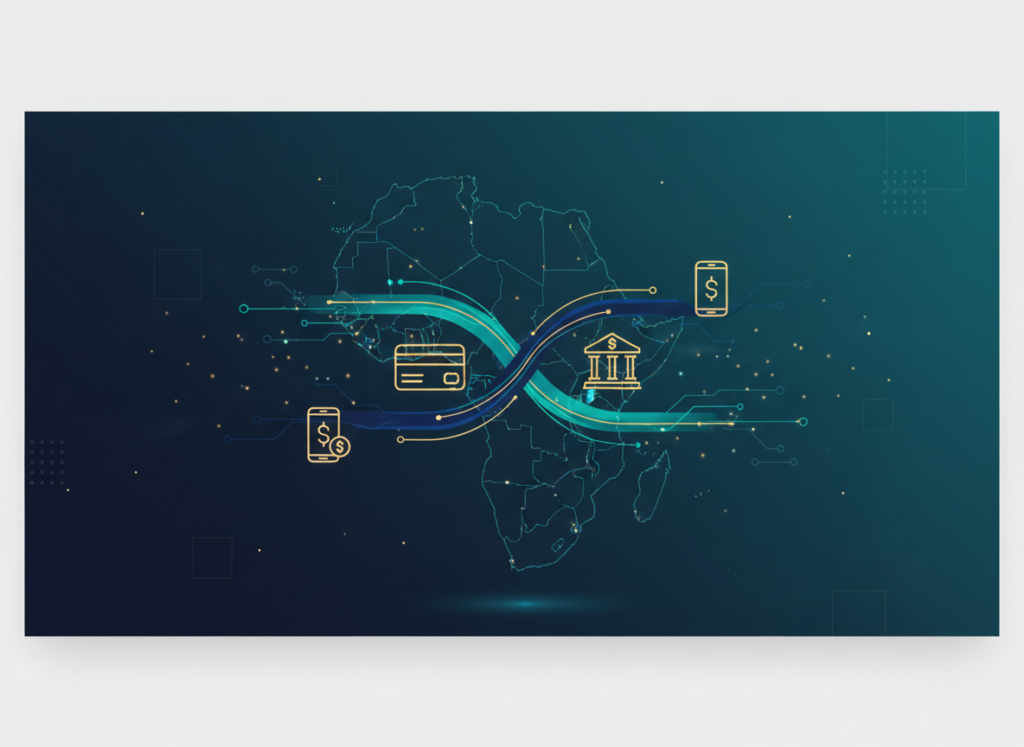
The broader trend: infrastructure is becoming the battleground
Across Africa’s fintech landscape, competition is shifting from front-end apps to the infrastructure that powers them. Payments, identity, compliance, and bank connectivity are becoming core differentiators — especially for platforms that serve enterprises and cross-border merchants.
This acquisition signals that Flutterwave is prioritizing deeper control over critical rails, rather than relying solely on partnerships. It also reflects a wider market reality: as regulators and banks modernize their systems, fintechs that can integrate quickly and securely will be best positioned to capture enterprise volume.
Implications for merchants and financial institutions
For businesses using Flutterwave, the acquisition could translate into:
- Faster onboarding through automated verification and reduced manual checks
- Lower payment costs in scenarios where bank transfers can replace card processing
- Improved settlement and reconciliation with more consistent data feeds
- Better support for local payment preferences across diverse African markets
For banks, increased open banking activity can be a double-edged sword. On one hand, it can drive higher transaction volumes and encourage API modernization. On the other, it increases competitive pressure as fintechs become the primary interface for merchant payments and customer financial experiences.
What to watch next
The key question now is execution: how quickly Flutterwave can integrate Mono’s technology and roll out open banking-enabled payment products at scale. Market-by-market differences in regulation, bank readiness, and API standards will continue to shape the pace of adoption.
However, the strategic direction is clear. As Africa’s digital economy grows, payment providers that can combine broad merchant reach with strong infrastructure — including open banking connectivity — will be better positioned to serve enterprise needs and unlock new revenue streams.
If Flutterwave successfully integrates Mono’s capabilities, the combined platform could accelerate the shift toward account-based payments and strengthen the continent’s payment interoperability — a critical step for scaling commerce across Africa.
Cosmopolitan The Daily provides comprehensive business news coverage across Finance, Technology, Energy, and Real Estate sectors, serving business leaders and decision-makers globally from offices in Bangalore, New York, Toronto, London, Dubai, Kuala Lumpur, and Sydney.