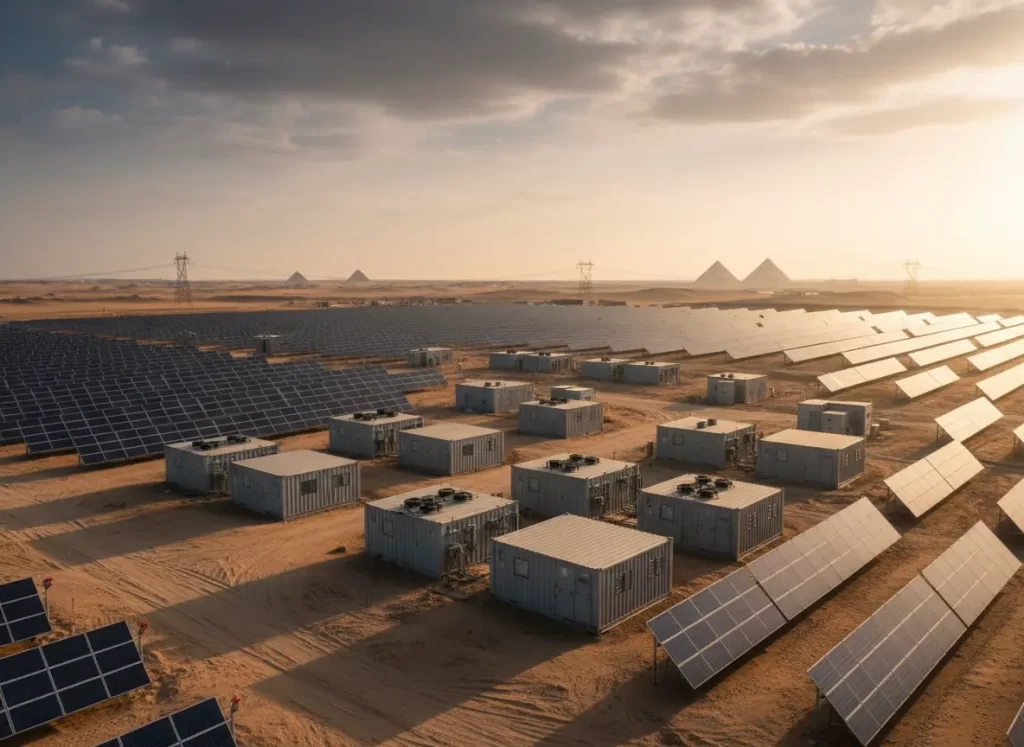
Egypt is accelerating its push toward energy security and cleaner generation—and Scatec’s latest move signals a major leap forward. The developer has announced plans to build what is being positioned as Africa’s largest combined solar and Battery Energy Storage System (BESS) portfolio in Egypt, a project expected to strengthen grid reliability, reduce dependence on fossil fuel imports, and support the country’s long-term renewable energy targets.
As North Africa becomes an increasingly strategic corridor for energy investment, Egypt is emerging as a focal point—thanks to its scale, grid expansion agenda, and growing demand from industry and urban development. A large solar-plus-storage portfolio is not only a capacity milestone; it represents a shift in how the region can integrate renewables at utility scale while maintaining stability and dispatchability.
Why solar-plus-storage matters now
Solar power has become one of the most cost-competitive sources of new electricity generation globally. However, the challenge for many grids—particularly those managing rapid load growth—is not generation alone, but timing. Solar output peaks during daylight hours, while demand often spikes in the evening.
This is where BESS becomes transformational. Battery storage allows excess solar generation to be stored and dispatched later, smoothing intermittency and helping operators meet peak demand without relying solely on gas-fired peakers or expensive imports. For Egypt, where grid resilience and demand management are increasingly critical, solar-plus-storage can provide:
- Improved grid stability through fast-response balancing
- Peak shaving that reduces strain during high-demand evening hours
- Lower curtailment, ensuring more renewable energy is actually used
- Greater energy independence, reducing exposure to fuel price volatility
Egypt’s renewable momentum and investment appeal
Egypt has been steadily building its renewable credentials over the past decade, supported by policy frameworks, large-scale procurement, and a growing pipeline of utility projects. The country’s strategic location—bridging Africa, the Middle East, and Europe—also gives it a unique advantage as regional energy trade and interconnection projects expand.
A portfolio of this scale sends a clear signal to the market: Egypt is not only adding renewable capacity, but also investing in the infrastructure needed to make renewables dependable at scale. That matters to industrial buyers, infrastructure developers, and financiers who increasingly evaluate projects based on reliability, not just headline megawatts.
What Scatec’s portfolio could unlock
While the full impact will depend on final capacity, phasing, and grid integration, large solar and BESS portfolios typically deliver benefits that extend beyond electricity generation. These include:
- Stronger energy securityBy pairing solar with storage, Egypt can reduce reliance on imported fuels and protect the grid from supply shocks. Storage also provides flexibility during operational disruptions, supporting a more resilient power system.
- Faster decarbonisation without sacrificing reliabilityOne of the biggest barriers to renewable penetration is the perception that clean energy compromises stability. Storage changes that equation. It enables renewables to behave more like conventional generation—dispatchable when needed.
- Economic value and job creationUtility-scale renewable projects create employment across engineering, construction, logistics, and operations. They also stimulate local supply chains, from civil works to electrical components and services.
- A stronger platform for future green industriesA more stable renewable grid supports the growth of energy-intensive sectors seeking cleaner power—such as sustainable manufacturing, data infrastructure, and potentially green hydrogen value chains over time.
The bigger picture: a template for Africa’s next phase of renewables
Across Africa, solar potential is abundant—but grid constraints and intermittency concerns have slowed large-scale adoption in several markets. Projects that combine solar with storage provide a model for how to scale renewables while addressing reliability head-on.
If executed successfully, Scatec’s Egypt portfolio could become a reference point for future developments across the continent—demonstrating that Africa’s renewable future is not only possible, but bankable and grid-ready.
Outlook
Egypt’s energy transition is moving from ambition to infrastructure. The rise of solar-plus-storage portfolios reflects a more mature phase of renewable development—one that prioritizes stability, dispatchability, and long-term system value.
As Scatec progresses on what is being framed as Africa’s largest solar and BESS portfolio, the project will be closely watched by policymakers, investors, and utilities across the region. Its success could help shape how emerging markets approach renewable integration at scale—turning clean energy from a capacity story into a reliability story.
About Cosmopolitan The Daily
Cosmopolitan The Daily is a global business publication covering Finance, Technology, Energy, Real Estate, and other high-impact sectors. With an international presence across major business hubs, we deliver authoritative reporting, market insights, and executive-focused coverage—alongside our annual Business Excellence Awards program recognizing innovation and value creation worldwide.