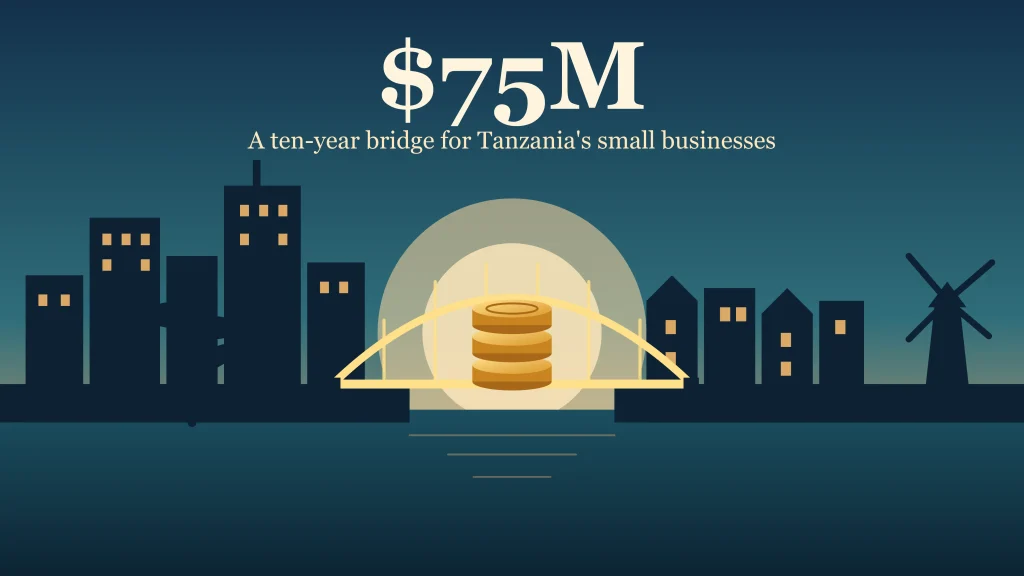
Tanzania’s CRDB Bank Plc has signed a $75 million long-term financing facility with FMO, the Dutch Entrepreneurial Development Bank. The facility will run for roughly ten years. It will deepen the bank’s capital base and expand the credit available to the entrepreneurs and small firms at the centre of the country’s economy.
The agreement was formalised on 15 October at the Africa Investor Forum, hosted by CRDB Bank together with the London-based network Invest Africa. The forum took place at the Sheraton Grande Sukhumvit in Bangkok, on the sidelines of the World Bank Group and International Monetary Fund Annual Meetings.
What the facility does
The financing strengthens CRDB’s Tier II capital. This is the supplementary layer of capital that regulators count towards a bank’s overall resilience. A bank with a stronger capital cushion can lend more with confidence, absorb shocks more easily and keep growing without stretching its balance sheet.
For CRDB, the stronger capital base translates into greater capacity to lend to micro, small and medium enterprises (MSMEs). Banking professionals and development economists often describe this segment as the engine of inclusive growth. MSMEs employ the majority of workers in most African economies, yet they are chronically underserved by formal finance. A shortage of long-term capital is one of the most persistent obstacles to their growth.
The package also carries support from the European Commission’s MSME platform guarantee. A guarantee of this kind shares part of the risk of lending to smaller borrowers, which makes it easier for a bank to say yes to businesses that might otherwise be considered too risky or too small.
A partnership with a track record
The agreement builds on an existing relationship. FMO has backed CRDB before. In a separate transaction, it and the French development finance institution Proparco provided a combined $125 million senior term loan, with FMO contributing $75 million. That funding was directed towards women-owned enterprises, agriculture, eligible green assets and CRDB’s subsidiary in Burundi.
FMO’s own project disclosures describe CRDB as a strategic partner. They cast the bank as a key player in Tanzania and an emerging regional force in East Africa. They also note that lending to financially strong institutions in least developed countries sits squarely within FMO’s 2030 strategy, which aims to reduce inequality.
FMO’s chief executive, Michael Jongeneel, said the institution was pleased to work with CRDB on a significant transaction. He described it as reflecting a shared commitment to improving access to finance for the entrepreneurs and businesses that drive growth and create jobs. He pointed to the combination of a stronger Tier II capital base and the European guarantee as the means by which more financing will reach MSMEs across Tanzania. He also commended CRDB for its leadership in financial inclusion and sustainable development.
CRDB’s Group Chief Executive and Managing Director, Dr. Abdulmajid Nsekela, said the FMO money strengthened the bank’s balance sheet and broadened its MSME lending. He described the week in Bangkok as an occasion on which the whole of CRDB was presented to international investors, with its Tanzanian, Burundian and Congolese teams meeting global capital face to face. In his view, each agreement signed was a bridge between African opportunity and global capital, which is what the forum’s theme meant in practice.
A first for Tanzania on impact disclosure. CRDB launched its Sustainable Development Impact Disclosure Framework. It applies the Impact Disclosure Guidance published in October 2024 by a taskforce co-chaired by J.P. Morgan and Natixis. The guidance is a voluntary standard for measuring and reporting development impact. CRDB is the first Tanzanian issuer to adopt it.
The framework rests on three objectives: equal access to financial services, local economic development and job creation, and digital financial innovation. These objectives are tied to four of the United Nations Sustainable Development Goals: No Poverty, Zero Hunger, Gender Equality, and Decent Work and Economic Growth. Each carries metrics and targets against which the bank will track its progress. This gives investors something concrete to hold the bank to, rather than a general promise of good intentions.
Alexandra Barry of J.P. Morgan’s Development Impact Advisory practice congratulated CRDB on the milestone. She said that by publishing the disclosure, CRDB offers greater transparency about its impact objectives and about how it intends to deliver and measure progress on financial inclusion, job creation and gender equality.
Affordable housing for the DRC. Shelter Afrique Development Bank marked the extension of a $10 million facility to CRDB Bank DRC. The money will support affordable housing development and the wider construction value chain. It turns into funding the memorandum of understanding that the two institutions signed at the 2025 World Bank and IMF meetings in Washington, D.C. That memorandum also provides for advisory support to CRDB’s housing finance team across the full housing value chain. Shelter Afrique’s chief executive, Thierno-Habib Hann, said he was glad to see the arrangement move from paper to delivery.
A renewed pact with Afreximbank. CRDB renewed its memorandum of understanding with the African Export-Import Bank, building on a 2023 agreement and broadening its scope. The renewed framework covers trade finance, syndication and structured financing, digital and payments platforms such as the Pan-African Payment and Settlement System, capital markets advisory, specialist insurance, and capacity building through staff training and secondments. It also connects the CRDB Bank Foundation’s lending to women- and youth-led businesses with Afreximbank’s Export SME Programme.
Government voices stress partnership
Senior Tanzanian officials attended and underscored the role of public-private cooperation in building investor confidence.
Bank of Tanzania Governor Emmanuel Tutuba said a sound and resilient banking sector is essential for mobilising investment and financing economic growth. He noted that Tanzania’s banks continue to show resilience, supported by strong capital and liquidity positions, with non-performing loans remaining within the regulatory threshold. That, he said, gives banks, investors and businesses a firm foundation on which to finance productive opportunities.
Finance Minister Ambassador Khamis Mussa Omar spoke of the government’s aim to turn Tanzania’s international relationships into investment, trade, technology, skills and sustainable growth. He said the country welcomes credible investors ready to partner in building a productive, competitive and sustainable economy. He also said the government wants investment conversations to produce bankable projects, financing and measurable economic results.
A week of investor engagement
The forum anchored an engagement week running from 13 to 16 October. It featured private roundtables and bilateral investor meetings focused on Burundi, the Democratic Republic of the Congo and Tanzania. Leaders of CRDB’s subsidiaries presented priority, bankable projects directly to investors. The bank’s group leadership met development finance institutions, institutional investors and private capital providers. Delegates also took part in an executive panel on how partnerships between African institutions and Asian and international investors can mobilise capital for the continent.
The location was deliberate. Asian capital has become an increasingly important source of trade and investment for Africa, and African lenders are courting it alongside their traditional European and North American partners.
Why it matters for Tanzanian businesses
For the shopkeeper, farmer, tailor, transporter or small manufacturer, announcements about Tier II capital and guarantees can sound remote. The link to daily life is direct, however. Loans for working capital, equipment, seed, stock and expansion depend on a bank’s ability to fund them over the long term. Short-term deposits alone cannot comfortably finance multi-year lending. Long-dated funding of the kind FMO is providing gives a bank the stability to extend longer-tenor loans, which is what growing businesses most often need.
The facility also arrives as CRDB pursues a regional strategy. The bank is active in Tanzania, Burundi, the Democratic Republic of the Congo and the United Arab Emirates, and it has voiced ambitions to expand further across the region. Capital strength and diversified funding are the foundation of that expansion. Development finance institutions like FMO also tend to bring more than money. Their involvement signals that a bank meets international standards on governance, risk management and environmental and social practice, which can open doors to further investors.
There are caveats worth keeping in view. A larger lending capacity is only valuable if it reaches the intended borrowers. Success will be judged by how many small firms, women-led enterprises and farmers actually gain access to credit, and on what terms. That is why the impact disclosure launched alongside the FMO deal is significant. It commits the bank to measurable targets and puts its performance in front of investors.
The bigger picture
The Bangkok signings reflect a wider shift in African finance. Local banks are no longer simply recipients of foreign capital. They are building institutional credibility, publishing impact data and assembling partnerships across continents. For development finance institutions, strong, well-capitalized local banks are among the most efficient channels for reaching millions of small enterprises, because they already hold the customer relationships, branch networks and digital platforms.
If the FMO facility performs as intended, over the next decade it will translate into thousands of loans to entrepreneurs who might otherwise have struggled to borrow. Those loans, in turn, support jobs, household incomes and local supply chains. For Tanzania, the agreement is one more sign that the country’s financial sector can attract long-term international capital and put it to work close to the ground.
CRDB Bank Plc is one of Tanzania’s largest financial institutions, serving millions of retail, business and institutional customers through an extensive network of branches, agents and digital channels. Public sources describe it as the first bank in Tanzania certified by the Green Climate Fund. In addition to its home market, it operates in Burundi, the Democratic Republic of the Congo and the United Arab Emirates. Its priorities include financial inclusion, support for MSMEs, agriculture, women’s economic empowerment and sustainable development.
FMO, the Dutch Entrepreneurial Development Bank, is the Netherlands’ development bank, headquartered in The Hague. It supports private-sector growth in developing and emerging markets by investing in sectors with high development impact, such as financial institutions, energy and agribusiness. Its goals include decent work, inclusive economies and action on climate change. The Dutch state is its majority shareholder.
Invest Africa is a London-based business network that connects international investors and companies with opportunities across Africa. It convenes forums, roundtables and dealmaking events and provides consulting services. It co-hosted the Africa Investor Forum with CRDB Bank.
Shelter Afrique Development Bank is a pan-African institution focused on housing and real estate finance. It supports affordable housing development and the construction value chain across its member countries.
Afreximbank (the African Export-Import Bank) is a pan-African multilateral financial institution that promotes intra-African and international trade. It offers trade finance and related products and supports payment and settlement platforms such as the Pan-African Payment and Settlement System.
Cosmopolitan The Daily is an online news and publication delivering timely reporting, analysis and features for a globally minded audience.